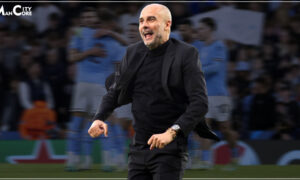
The Premier League interrupted a Commons select committee hearing on Wednesday to deny claims that it has spent £500m fighting the Man City charges case.
The figure was quoted as MPs on the Digital, Culture, Media and Sport Committee questioned Independent Football Regulator (IFR) chair David Kogan and chief executive Richard Monks at Portcullis House in Westminster. Not long after, the committee chair was passing on the league’s objections live in the room.
The MPs had also been pressing Kogan and Monks on whether the regulator, only formed in 2025, could force City’s owners to sell the club, and how the watchdog would fund a massive court battle if it was ever sued.
What did the Premier League tell MPs?
Over an hour into the session, Kogan was talking about the Premier League-EFL backstop when he was stopped by Dame Caroline Dinenage, who chairs the committee.
She said: “Can I just intervene and just say that the Premier League is desperate for me to say that they haven’t spent £500m fighting the Man City case. I’m saying it because I am getting furious messages from the Premier League to tell you that. I would like to see them bring such diligence to the issue of funding so we wouldn’t need a backstop.”
Kogan saw the funny side. He replied: “I have to say, I didn’t realise this was an interactive session. Are they criticising anything that I’ve said?”
Dame Caroline answered: “To be honest, I haven’t engaged with them.”
How much has the Man City case really cost?
Nobody has put an official number on it yet. Reports suggest the Premier League’s costs in this specific case could be up to £50m, a tenth of the figure quoted in the committee room, but that has not been confirmed.
That number matters to City as much as to the league. Depending on how their appeal goes, the club could be forced to repay the actual amount.
City were charged in February 2023 with 115 alleged breaches of financial rules spanning nine seasons, from 2009 to 2018. The club were accused of inflating sponsorship deals and concealing payments to players and managers. After a private hearing in late 2024, an independent commission published its verdict on 29 September, finding City guilty on 114 of the 115 charges and ruling that “sham” contracts had inflated revenues by more than £900m.
The row over who pays for all this has been building for a while. Last week 18 Premier League clubs voted to protect Richard Masters and the board if City’s sponsors sue them personally, with City reported to be one of the two clubs who said no.
When is the Man City appeal, and what happens next?
City have strenuously denied all wrongdoing and lodged a comprehensive appeal on 1 October, saying the commission’s ruling contained “clear material errors of law, principle and fact.” It is not a re-trial: City must prove legal or procedural errors.
The appeal hearing is set to go ahead in the middle of next month and could take several days, as we covered when the December date for City’s appeal was set. The findings, and whether the guilty verdict is upheld, are expected to be handed down in the New Year.
Sanctions would only be decided after that, and only if the appeal fails. The Premier League rulebook gives the independent commission the power to impose whatever punishment it deems appropriate, from points deductions to outright expulsion from the league. City also have the right to lodge a separate appeal against any sanction.
Verdict: a sideshow, but not a meaningless one
The £500m line was always going to draw a reaction, and the speed of the league’s response says a lot about how sensitive the cost of this case has become. If the real bill ends up nearer £50m, City will be keen for that to be the number on the table if they are ever asked to cover it.
For City fans, though, the bigger question was the one MPs were asking before the interruption: what the new regulator could do about the club’s ownership. The case has already hit the owners in the pocket, with a $2bn loan scrapped at the final stage. December’s appeal hearing is now the date that matters most, far more than any argument over legal fees.